
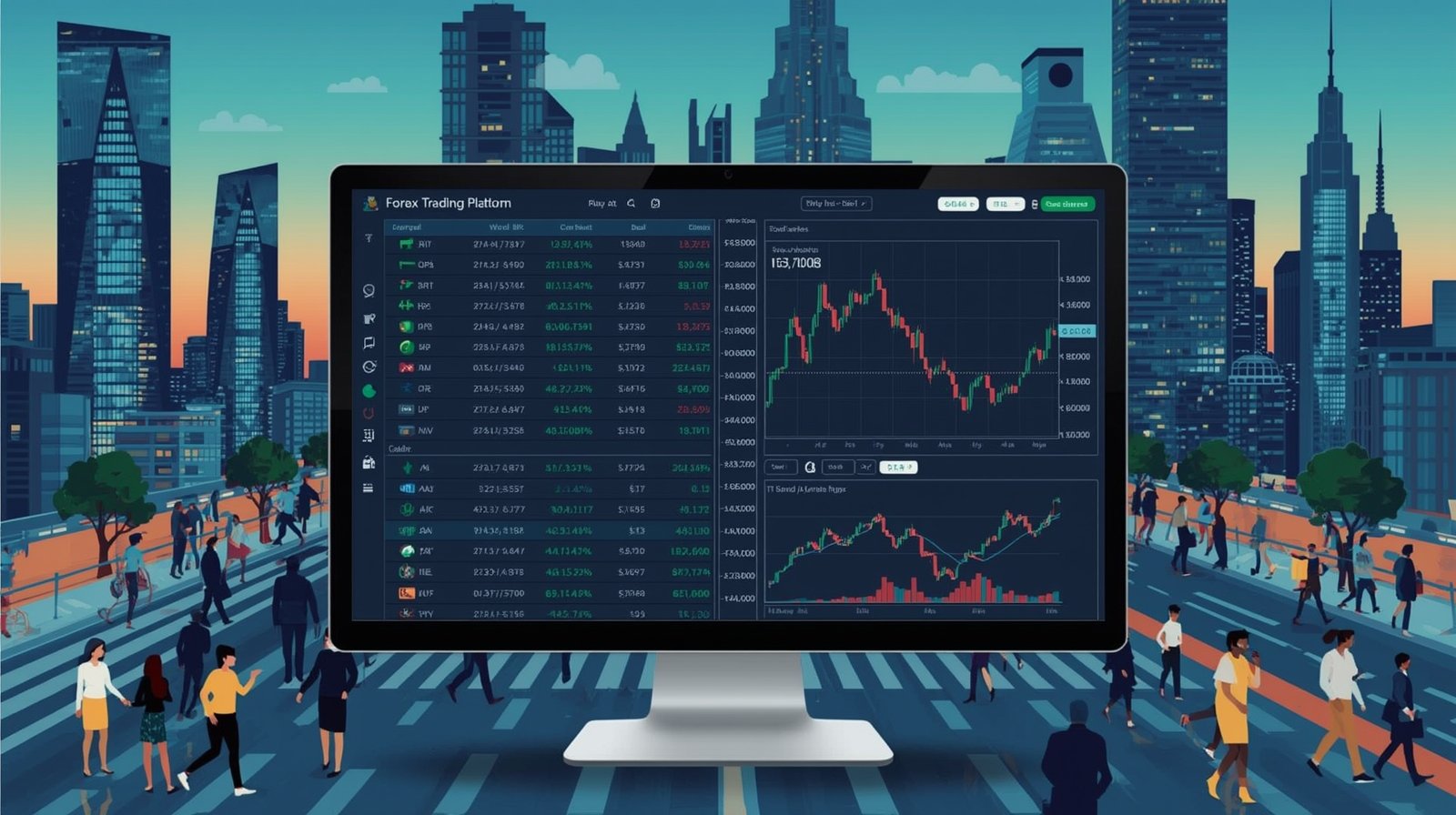
The promise of artificial intelligence in trading sounds almost too good to be true. Machines that never sleep, analyzing thousands of data points per second, executing trades without fear or greed. But the most compelling claim might be this: AI trading bots that actually learn from their mistakes, improving over time like a human trader with decades of experience compressed into months.
For advanced traders exploring automated solutions, this raises a critical question. Can these systems genuinely adapt and improve, or is “machine learning” just marketing speak covering up rigid algorithms that break down when markets behave unexpectedly?
Modern AI trading bots use reinforcement learning and neural networks to analyze past trades, identify patterns in losses, and adjust strategies. However, true learning requires continuous retraining, quality data, and proper risk controls. Not all systems adapt equally, and market conditions can change faster than models retrain.
How Machine Learning Actually Works in Trading Systems
Machine learning in trading operates differently than the fixed algorithms that dominated automated trading for decades. Traditional algorithmic trading follows explicit rules: if price crosses above the 50-day moving average while RSI is below 30, execute a buy order. These systems cannot deviate from their programming, no matter what happens.
Machine learning trading systems take a different approach. They use statistical models trained on historical data to recognize patterns associated with profitable trades. When the system encounters similar patterns in live markets, it takes action based on what worked previously.
The learning process happens in several stages:
- Training phase: The model analyzes historical price data, volume, volatility, and other variables to identify relationships between market conditions and profitable outcomes
- Validation phase: The trained model is tested on different historical data it has not seen before to measure its predictive accuracy
- Live deployment: The model executes trades in real market conditions, tracking performance metrics
- Retraining cycle: New market data is fed back into the model, allowing it to adjust parameters and improve
Systems like those developed by AI trading bot providers use neural networks that can identify non-linear relationships humans might miss. These networks contain layers of interconnected nodes that process information similarly to neurons in a brain, though the comparison has limits.
The key difference between true machine learning and static algorithms is adaptability. A machine learning model can adjust how heavily it weighs different variables based on recent performance. If a particular technical indicator stops predicting price movements accurately, the system can reduce its importance without human intervention.
The Reality of Algorithmic Feedback Loops
When an AI trading system makes a mistake, what actually happens? The answer depends on how the feedback mechanism is designed.
Reinforcement learning represents the most sophisticated approach to learning from errors. In this framework, the system receives positive or negative rewards based on trade outcomes. A profitable trade provides a positive signal, strengthening the decision-making pathway that led to that trade. A loss provides a negative signal, making that pathway less likely to activate under similar conditions.
This sounds straightforward, but market trading creates unique challenges for reinforcement learning. The feedback is noisy and delayed. A trade that looks like a mistake today might have been correct if held longer. A winning trade might have succeeded despite poor logic, not because of it. The system must distinguish between luck and skill, signal and noise.
Algorithmic feedback loops can also create unintended consequences. If many AI systems learn similar patterns and begin trading in the same direction simultaneously, they can move markets and invalidate the very patterns they identified. This self-referential problem makes financial markets fundamentally different from games like chess or Go, where AlphaGo achieved superhuman performance.
Some systems implement online learning, updating their models continuously as new data arrives. Others use batch learning, retraining periodically on accumulated data. Each approach has tradeoffs:
| Learning Approach | Advantages | Disadvantages |
|---|---|---|
| Online Learning | Adapts quickly to changing conditions; responds to recent market shifts | Can overfit to noise; may chase false patterns; computationally intensive |
| Batch Learning | More stable; filters out short-term noise; easier to validate before deployment | Slower to adapt; may miss regime changes; requires more historical data |
The most effective machine learning trading systems often combine both approaches, using online learning for short-term tactical adjustments while periodically retraining the entire model on larger datasets.

What Adaptive Systems Can and Cannot Do
Understanding the genuine capabilities and limitations of adaptive trading systems requires cutting through marketing claims to examine what the technology actually delivers.
Adaptive systems excel at pattern recognition across massive datasets. They can simultaneously monitor correlations between dozens of currency pairs, interest rate differentials, volatility indices, and sentiment indicators. When similar configurations appeared before price movements in the past, the system identifies these setups faster than human traders.
These systems also remove emotional bias from execution. Fear and greed do not influence their decisions. They do not hesitate when a signal appears, nor do they chase losses trying to recover from drawdowns. This consistency provides real advantages, particularly during volatile market conditions when human judgment often fails.
Risk management represents another area where adaptive systems demonstrate clear benefits. They can continuously recalculate position sizing based on current volatility, adjust stop losses as trades develop, and enforce maximum drawdown limits without exception. The discipline is absolute.
However, adaptive systems face significant limitations that traders must understand:
- They cannot predict unprecedented events: Black swan events by definition fall outside historical patterns the system learned from
- They struggle with regime changes: When market structure fundamentally shifts, past patterns may become irrelevant before the system adapts
- They require quality data: Garbage in, garbage out applies doubly to machine learning systems
- They can overfit: Learning noise instead of signal creates models that performed well in backtests but fail in live trading
- They lack contextual understanding: An AI does not “know” that a central bank meeting is happening or understand why that matters
The question of whether AI trading bots can learn from mistakes depends partly on how we define “learning.” If learning means adjusting parameters based on performance feedback, then yes, modern systems do this. If learning means developing genuine market intuition and understanding causation, then no, current technology falls short.
Evaluating Learning Capabilities Before Committing Capital
For traders considering automated solutions, assessing a system’s true learning capabilities requires looking beyond marketing materials. Several concrete factors indicate whether an adaptive system can genuinely improve over time.
First, examine the retraining frequency and methodology. Systems that never update their models are not learning, regardless of what they are called. Ask specific questions: How often does the model retrain? What triggers a retraining cycle? How much new data is required before retraining occurs? How is the retrained model validated before deployment?
Second, investigate the performance monitoring infrastructure. Genuine learning systems track granular metrics beyond simple profit and loss. They measure prediction accuracy, signal quality, execution efficiency, and risk-adjusted returns across different market conditions. Without detailed performance analytics, the system cannot identify what needs improvement.
Third, understand the risk controls that prevent harmful learning. Adaptive systems can learn the wrong lessons from data. Effective platforms implement guardrails: maximum position sizes, drawdown limits that pause trading, and validation requirements before deploying retrained models. These protections prevent the system from adapting itself into catastrophic losses.
Fourth, consider transparency and explainability. Some machine learning models operate as black boxes, making decisions through processes their creators cannot fully explain. While these may perform well, they create risk. Systems that provide insight into their decision-making logic allow traders to identify when the AI might be learning incorrect patterns.
Platforms like those offered by Korvato that provide institutional-level technology to retail traders should demonstrate these characteristics. The system should clearly communicate how it processes information, adapts to changing conditions, and manages risk while maintaining user control over capital and trading parameters.
Finally, maintain realistic expectations. No AI system eliminates trading risk. Markets remain unpredictable, and all trading involves the possibility of loss. Past performance, even for adaptive systems that improved over time, does not guarantee future results. The goal is not perfection but rather a systematic edge executed with discipline over many trades.
The Path Forward for Intelligent Trading Systems
AI trading bots can learn from mistakes within the constraints of their design and the data available to them. Modern machine learning techniques enable genuine adaptation that goes beyond simple rule-following. Systems can identify when strategies stop working, adjust their approach, and improve performance over time.
However, this learning differs from human intuition and remains bounded by fundamental limitations. These systems analyze correlations in historical data and adjust parameters based on feedback. They do not understand markets in any meaningful sense, and they cannot prepare for scenarios completely outside their training data.
For advanced traders, the practical takeaway is this: AI trading technology offers real advantages in pattern recognition, execution speed, emotional discipline, and risk management. The best systems do adapt and improve through sophisticated feedback mechanisms. But they remain tools that require informed oversight, realistic expectations, and proper risk management.
The question is not whether AI can replace human judgment entirely, but rather how traders can leverage adaptive systems while remaining aware of their limitations. Technology continues advancing, and the gap between AI capabilities and human intuition narrows. For now, the most effective approach combines algorithmic precision with human oversight, allowing each to complement the other’s strengths.
Disclaimer: Trading involves risk and may result in the loss of your capital. Past performance does not guarantee future results. All information provided on this website is for educational and entertainment purposes only. Korvato provides software tools and does not offer financial, investment, or brokerage services. Always trade responsibly.